
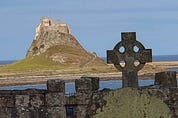
Threshold Figures: The Hiddenness of Moluag, a White Martyr
exploring the Celtic Saints

Alistair Moffat, in his book In Search of Angels, describes St Moluag as a white martyr.
The early Irish Church recognised three forms of martyrdom:
Red martyrdom – the shedding of blood for Christ through persecution or execution.
White martyrdom – leaving behind home, family, status and security for Christ, embracing voluntary exile and a life of sacrificial mission.
Green (or blue) martyrdom – the daily dying to self through prayer, fasting, repentance and the disciplines of the spiritual life.
Moluag embodied all the marks of a white martyr. Around AD 562 he left Ireland with twelve companions and crossed the sea to Lismore, where he established what became one of the most influential centres of Christian mission in early medieval Scotland. He did not simply preach to the people of Alba; he shared their lives, planting communities of prayer, hospitality and learning.
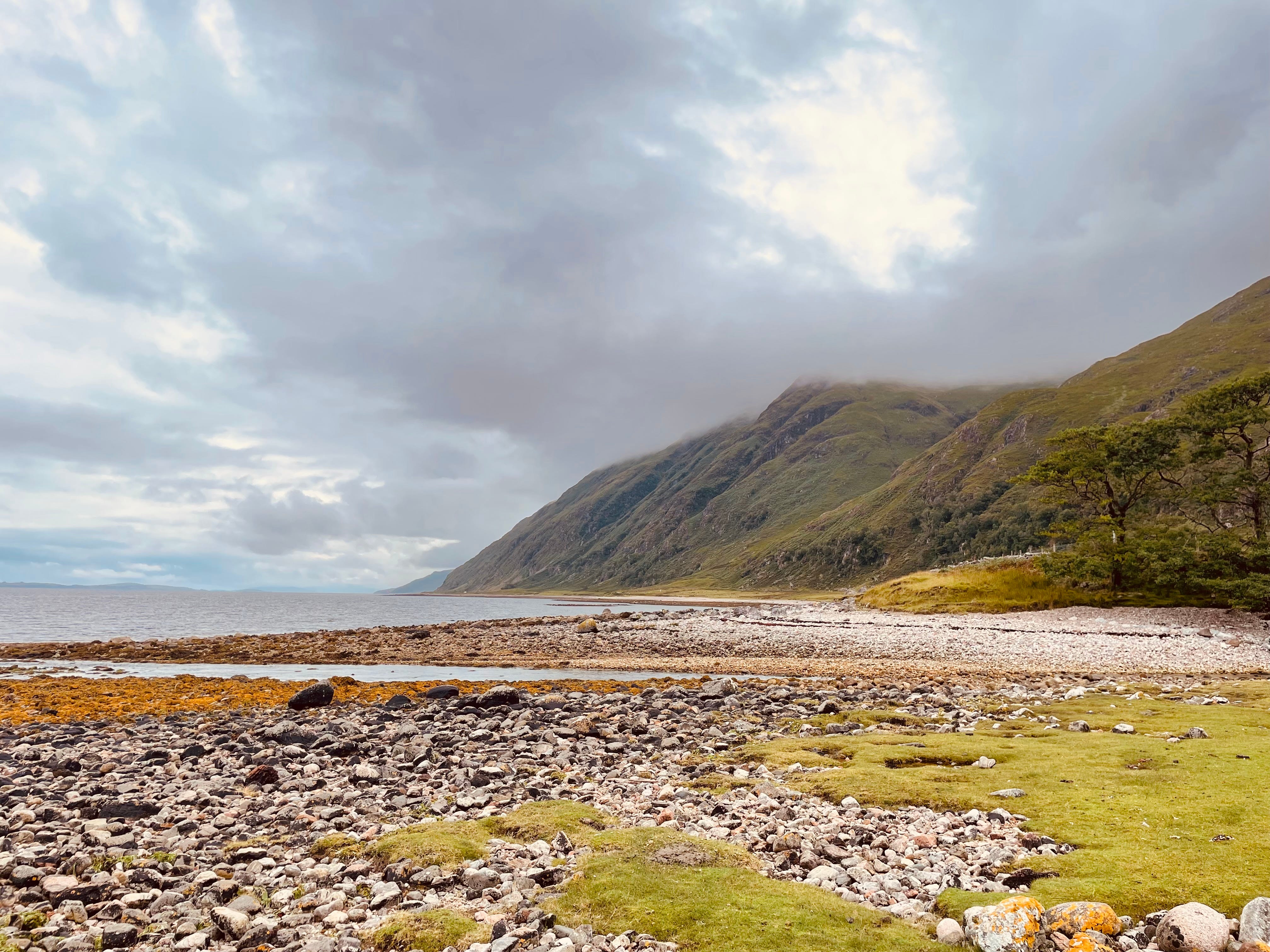
(looking out to Lismore)
Today, Columba understandably dominates the story of Celtic Christianity. His monastery on Iona, the Life of Columba written by Adomnán, and centuries of devotion have ensured his lasting fame. Yet Moluag was no minor figure.
In a charter issued in 1544 by Archibald Campbell, Earl of Argyll, Moluag is named as the patron saint of Argyll. Alistair Moffat goes further, suggesting that
“Moluag may well have been the earliest patron saint of Scotland, more favoured than Columba or Andrew... and yet, until recently, he has been entirely forgotten.”
While such claims cannot be proved with certainty, they remind us that Moluag’s influence was once far greater than his present reputation suggests. His feast day, which had long disappeared from the Roman calendar, was restored by Pope Leo XIII in 1898.
What are we to make of this hiddenness?
Unlike Columba or Cuthbert, we possess no contemporary Life of Moluag.
The stories that survive are scattered through later sources such as the Aberdeen Breviary and local traditions. Yet one early witness shines through the centuries. The Martyrology of Óengus, compiled around AD 800–830, honours him with the striking title:
“The clear and brilliant one, the sun of Lismore in Alba.”
It is a beautiful image. History may have preserved only fragments of Moluag’s story, but those fragments still radiate the warmth of a life that illuminated countless others.
Travellers arriving by ferry on Lismore come ashore at the Field of the Cross, recalling the ancient high cross that once stood there. Alistair Moffat suggests it marked the boundary between the sacred and the secular. Yet I wonder whether the Irish monks would have understood it quite that way.
The Celtic missionaries certainly set apart places for prayer, hospitality and worship, but they also held a profoundly sacramental vision of creation.
Heaven and earth were not divided into separate realms so much as woven together. Certain places became “thin places” not because God was absent elsewhere, but because his presence had been recognised, celebrated and remembered there.
I also find it intriguing that Moluag is consistently remembered as a bishop.
Some historians have contrasted the Abbot Columba with the Bishop Moluag, although the distinction may be less clear-cut than later writers imagined. Even so, the image is suggestive.

If Columba is remembered primarily as the founder of a great monastery, perhaps Moluag is remembered more as a shepherd among his people, travelling, teaching and caring for scattered communities across Argyll and the north-east of Scotland.
That pastoral identity survives in one remarkable object: the Bachuil Mòr, Moluag’s crozier or bishop’s staff. It is one of the oldest surviving pastoral staffs in Britain. For centuries it was entrusted to hereditary keepers known as the Barons of Bachuil, who held land on Lismore in return for safeguarding this precious relic.
I am still not sure why Moluag became such a hidden figure. Perhaps we will never know. However, his name and reputation are being restored in some measure, and I find myself drawn to him as an apostle and bishop.
Prayer
Lord Jesus Christ, You called Moluag to leave everything behind.
Give us the courage to embrace the hidden path,
to seek faithfulness rather than recognition,
service rather than status.
May we become people whose lives quietly point to you,
content to let Christ increase
even if we ourselves are forgotten.
For your Kingdom is built not only through great names,
but through humble servants
whose faithfulness is known fully by you alone.
Amen.

If you enjoy my writing, you can buy me a coffee at:
This morning I joined a walk with the new Bishop of the Diocese. The idea to visit parishes in the city during the day. I walked from my church to the next one ( ironically called the same name). At our destination I sat mutely listening to how wonderful their church was and I wondered if that was the point. What makes the church effective, growing etc. Is it because it's more famous? More like Columba than Moluag, or is just serving where we are enough?
Great to hear more people are getting to know him. The key difference between an abbot and bishop of that time was bishops travelled more from place to place like the early Apostles. Hence why St Bernard of Clairveax would claim St Moluag founded 100 churches.